
What Changed and Why It Matters
Construction sites haven’t looked the same for a while now. The thick sand-cement beds, the bags of aggregate being mixed on-site by hand, the walls going up slowly — that’s still happening on some projects, but it’s increasingly the exception rather than the rule.
AAC blocks changed things. Fly ash bricks changed things. Lightweight masonry is lighter, faster to lay, better for thermal performance, and it dominates modern residential and commercial construction. But here’s what nobody mentions when they sell you on AAC blocks: they need a different mortar. Traditional cement mortar with its 10-15mm joints doesn’t work properly with lightweight blocks. The physics don’t line up. The joint becomes the weak point.
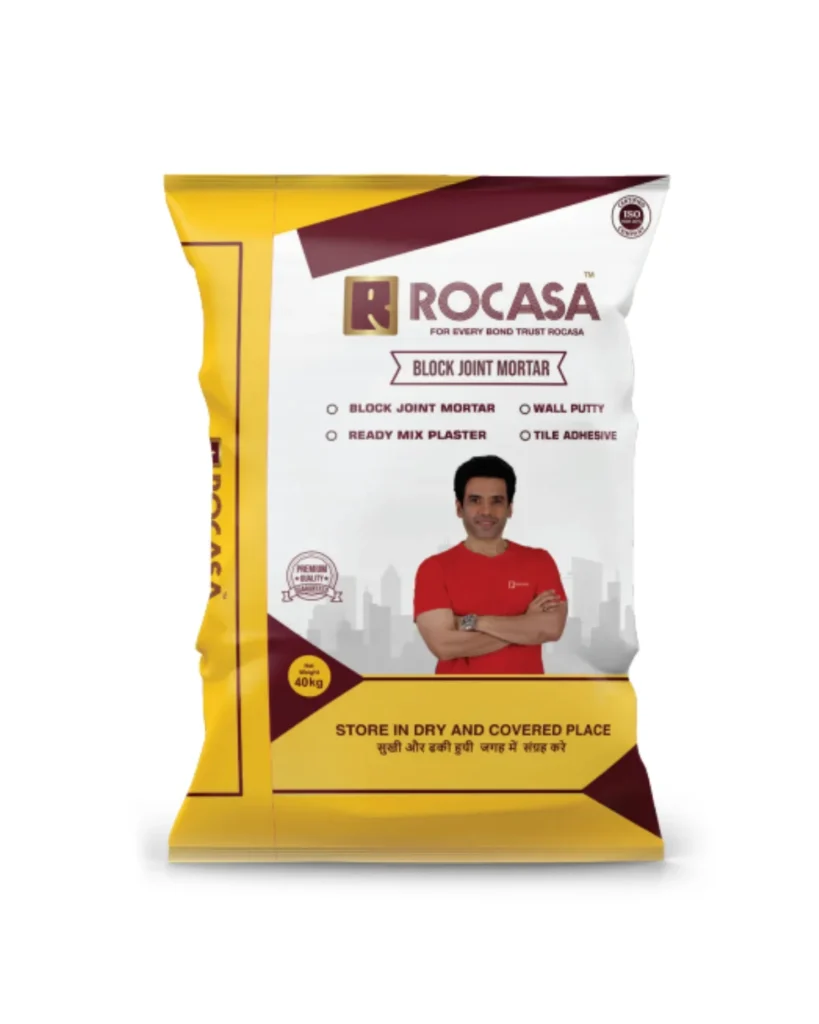
Block joint mortar — 3 to 5mm joints, polymer-modified, ready to mix — is the product that actually makes lightweight block construction work the way it’s supposed to.
What the Product Actually Is
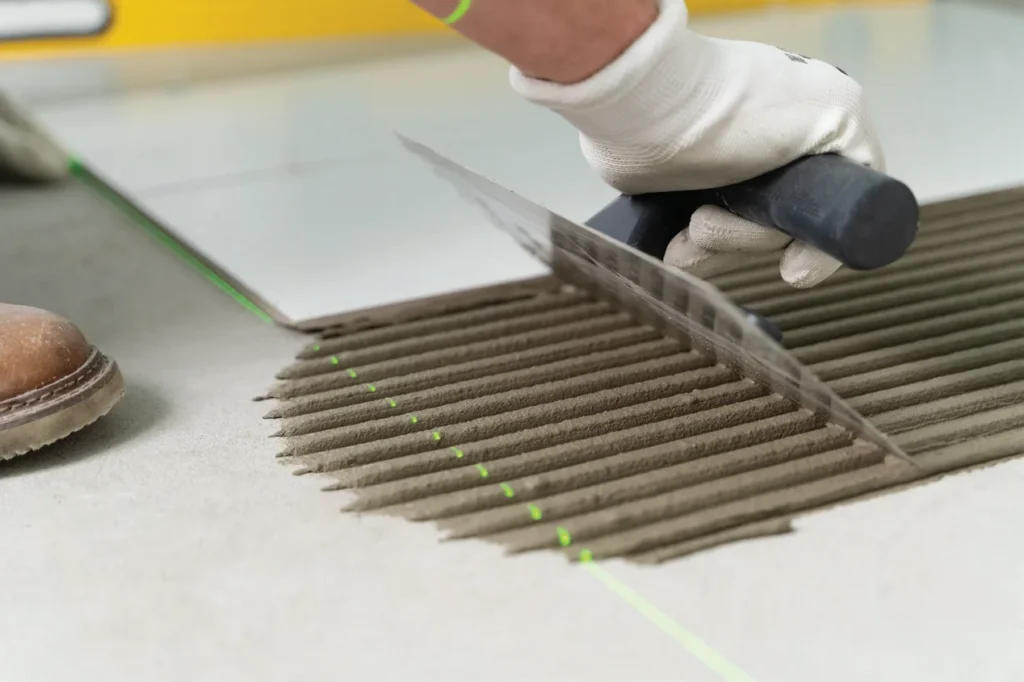
Pre-blended cement, graded sand, polymer additives. Add water, mix, apply. That’s the workflow.
The thin joint isn’t just a cosmetic preference. It’s structural. A 3mm mortar joint between two AAC blocks creates a different kind of bond than a 12mm sand-cement bed. There’s more contact area relative to mortar volume, the polymer additives create adhesion that mechanical grip alone can’t match, and the cured joint doesn’t shrink and crack the way thick mortar does as it loses moisture.
The result is a wall that behaves more uniformly under load — no soft spots at the joints, no differential movement that opens hairline cracks over the first few monsoon seasons.
The Site Efficiency Argument
This one’s straightforward. Pre-mixed means no on-site batching. No cement, no sand, no aggregate stored separately, no measuring ratios by eye or by habit. The mortar consistency is the same on Monday morning and Friday afternoon, which is genuinely not true of site-mixed cement mortar, regardless of what the foreman will tell you.
Masons lay more blocks per day with block joint mortar. The thin bed sets faster. The reduced joint width means less material per square metre of wall. Less wastage on site. Cleaner wall surfaces coming off the block layer, which reduces the plaster coat needed for finishing.
These are not marginal gains. On a project with thousands of square metres of wall area, they compound into real schedule and cost differences.
Thermal Performance — the Benefit Nobody Talks About
AAC blocks have good thermal properties. The air entrainment in the block itself provides insulation. What undermines this is thermal bridging — the heat flowing through denser mortar joints rather than through the block.
Thick cement mortar joints create significant thermal bridges. Thin block joint mortar joints don’t, or at least do so much less. The wall performs closer to how the block manufacturer’s specifications suggest it should perform. In climates where cooling loads matter — which is most of India — this translates to measurable energy savings over the building’s life.
It doesn’t show up in the construction budget. It shows up in the electricity bill. Specifiers who think about lifecycle cost rather than just build cost pay attention to this.
Where It's Used
Residential apartment buildings are the dominant application. The combination of AAC blocks and block joint mortar is now standard specification on most mid-to-high quality residential projects in urban centres.
Commercial buildings, hospitals, educational institutions, industrial structures. Anywhere lightweight block construction is used, block joint mortar is the correct accompanying product. It’s not optional if you’re building with AAC — it’s part of how AAC construction is supposed to work.
Why the Manufacturer Behind the Product Matters
This is where people skip the detail they shouldn’t.
Block joint mortar is a formulated product. The polymer type, the polymer content, the sand grading, the cement quality, the ratio — these determine whether the product performs to specification or gives you unpredictable results in the field. Two bags with similar labels can behave differently.
A reliable Block Joint Mortar Manufacturer in India with actual quality control systems produces consistent product across batches. You’re not testing each delivery to see if this one sets properly. You know it will.
An experienced Block Joint Mortar Supplier in India who understands the products they stock can tell you which mortar is appropriate for your block type, joint width, and site conditions — not just hand you whatever’s on the shelf. That guidance is worth something, especially on first use.
For projects in Gujarat and the surrounding region, a well-established Block Joint Mortar Manufacturer in Ahmedabad offers proximity advantages — shorter supply chains, faster delivery, more accessible technical support when something on site needs clarification. Similarly, a reputed Block Joint Mortar Manufacturer in Rajasthan serving construction projects across the region brings the same combination of regional availability and manufacturing standards that serious projects require.
FAQ
Joining AAC blocks, fly ash bricks, CLC blocks. Any lightweight masonry where thin-joint construction is specified.
Thin joints, polymer modification, pre-blended consistency. The bond mechanism is different and the joint thickness is a fraction of what cement mortar requires.
Yes. No site mixing, faster setting, more blocks laid per shift. The math is straightforward.
It’s designed for lightweight block construction. If you’re using traditional brick with thick mortar beds, it’s not the right product. If you’re using AAC or fly ash blocks, it’s the right product.
Because you’re relying on a formulated product to perform consistently. Inconsistent polymer content or sand grading means inconsistent bond strength. A manufacturer with proper quality control eliminates that variable.