
The Part Most People Skip
Walk into any tile showroom and you’ll spend an hour choosing between marble finish and wood-look porcelain. The adhesive conversation? Five minutes, if that. Usually just: grab whatever’s on the shelf or whatever the contractor says he always uses.
And then a year later someone’s tapping their bathroom floor, hearing that hollow knock, and wondering why a tile that cost four hundred rupees per square foot is coming loose.
The tile didn’t fail. The adhesive did. Or rather — the wrong adhesive was used for that tile on that surface in that environment. It’s a boring reason for an expensive problem.
Why the Old Cement Mortar Approach Does Not Work Anymore
Traditional sand-cement mortar worked fine when tiles were thick, heavy, and relatively forgiving. Those tiles had high porosity — they absorbed the mortar, gripped it, bonded mechanically. You could get away with inconsistency.
Modern vitrified and porcelain tiles are a completely different product. They’re dense. Almost zero water absorption. Smooth on the back. Sand-cement mortar bonds to moisture and surface texture. Take those away and you’ve got very little to work with. The tile sits on top of the mortar rather than bonding to it, and eventually — especially with any thermal movement or substrate flex — it lifts.
This is why the shift to polymer-modified adhesives happened. Not a marketing thing. A material science thing. The chemistry actually works differently and it actually matters.
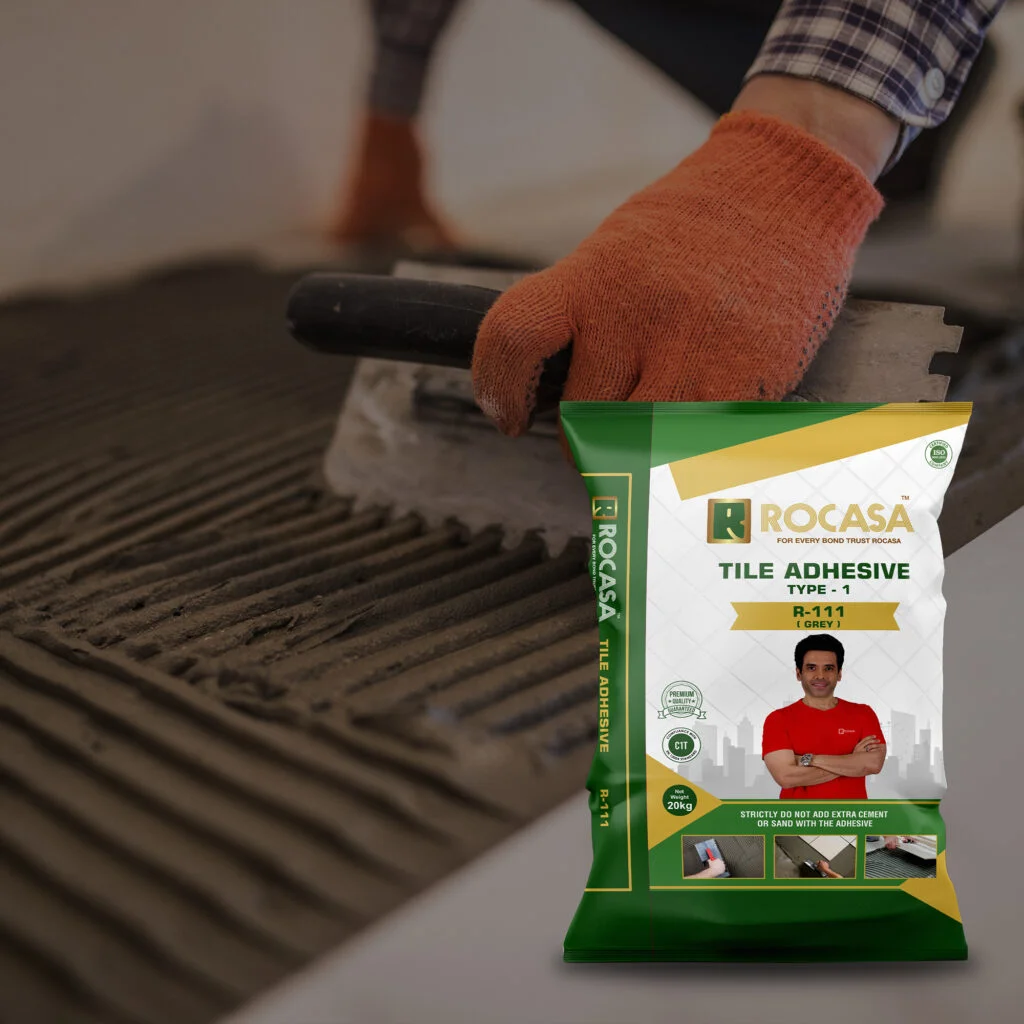
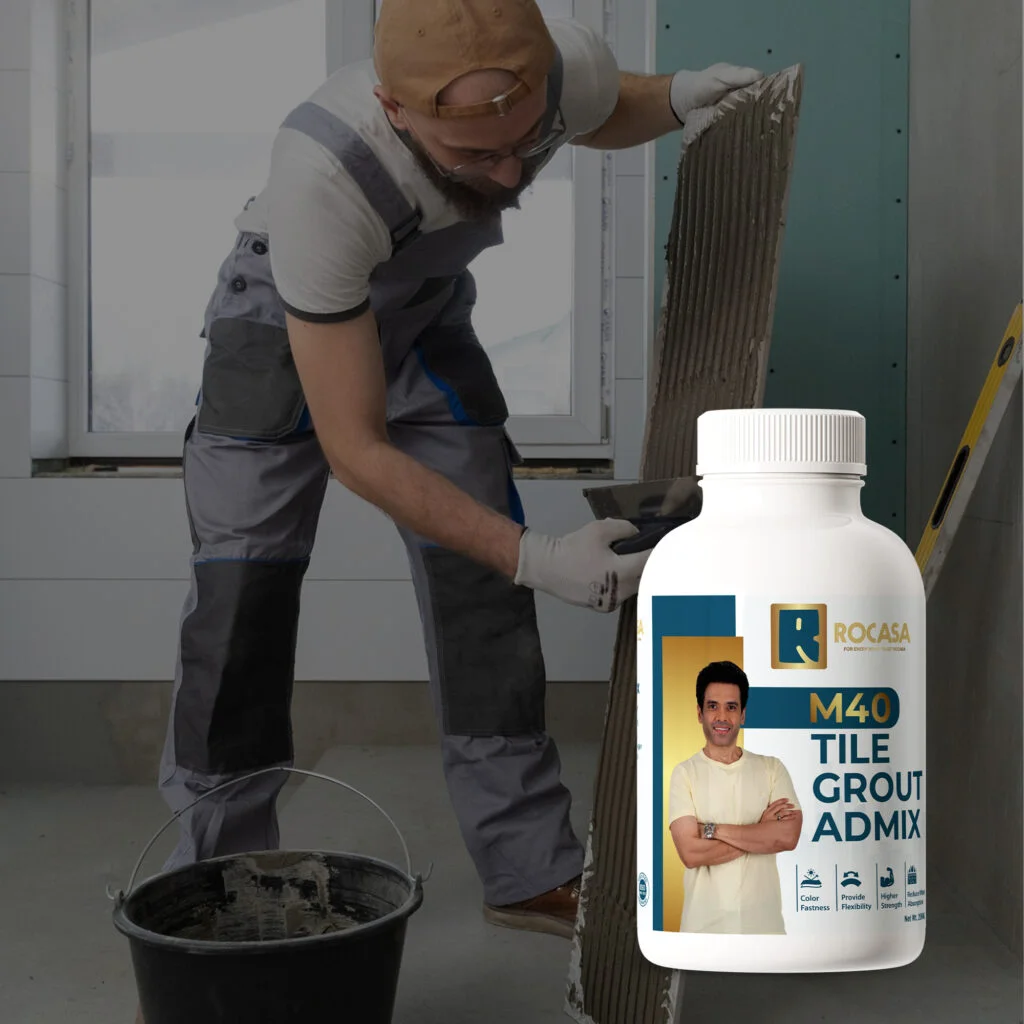
Ceramic Tiles: Standard Requirements, Still Worth Getting Right
Ceramic tiles are the most forgiving in the adhesive category. They’re lighter, more porous than vitrified, and bond reasonably well with standard modified adhesives. But ‘forgiving’ doesn’t mean ‘anything goes.’
Wet areas — bathrooms, kitchen backsplashes — still need adhesives with proper water resistance. Standard grey or white polymer-modified products from a reliable Ceramic Tile Adhesive Supplier in India cover most ceramic installations competently. The trap is assuming that because ceramic is forgiving, you can push the coverage percentage or leave gaps under the tile. Hollow spots are where moisture finds a home.
Vitrified Tiles: Where Most Failures Happen
Vitrified is where things get specific. The near-zero absorption rate means you’re bonding almost entirely to the surface chemistry rather than into the material. The adhesive has to be formulated for this. High polymer content, proper open time, a back-buttering approach on anything above 60×60.
The other thing about vitrified — especially the polished variety — is weight distribution. A 600×600 tile sitting on even marginally insufficient coverage will stress at the edges. Walk on it a few hundred times and the bond fails from the edges inward. This is why adhesives from an experienced Vitrified Tile Adhesive Manufacturer in India specify minimum coverage percentages specifically for vitrified applications. Those numbers aren’t conservative estimates. They’re based on what actually fails in the field.
Large Format Tiles: A Different Problem Entirely
800×1600. 1000×3000. These formats are everywhere in commercial and high-end residential projects right now and they are genuinely more demanding to install than smaller tiles. Not just heavier — though they are — but the substrate has to be near-perfect because there’s nowhere to hide variation. A 3mm hump under a large format tile creates a lippage problem that can’t be fixed without removing the tile.
The adhesive for large format work needs three things specifically: extended open time so you can work across a large area before the bed skins over, anti-slump properties so the tile doesn’t drift after placement, and consistent coverage that bridges minor substrate imperfections. Products from a trusted Large Format Tile Adhesive Manufacturer in India that are rated for the format sizes you’re working with are not optional. Using an adhesive designed for 300×300 on 1200×600 tiles is how projects end up with callbacks six months later.
The Surface Question Nobody Asks Early Enough
Most adhesive selection conversations start with the tile. They should start with the substrate.
Concrete, screeded floors, existing tiles, plasterboard, gypsum — each needs a different approach. Existing tiles need a high-grab adhesive or a primer coat. Gypsum board needs a moisture-resistant product and probably a waterproofing membrane before tiling. Old screeds with movement history need a flexible adhesive rather than a rigid one.
A good Tile Adhesive Supplier in India will ask about the substrate before recommending a product. If they don’t ask, that’s worth noting.
Outdoor, Wet, and High-Traffic Areas
Outdoor installations deal with thermal cycling. Tiles expand and contract with temperature. Rigid adhesives crack under this movement. Flexible or semi-flexible adhesives accommodate it. This isn’t a premium option for outdoor work — it’s the correct specification.
Wet areas need waterproofing membrane under the adhesive, full stop. The adhesive being water-resistant doesn’t make the system waterproof. Swimming pools and wet rooms need specialist products rated specifically for full immersion. Don’t let a contractor substitute a general adhesive and call it ‘good enough for wet areas.’ It isn’t.
High-traffic commercial floors need higher compressive strength ratings. Adhesives from a quality Tile Adhesive Manufacturer in India will carry technical data sheets that specify compressive and tensile strength — ask for them and match them to your use case.
The Manufacturer Question
Adhesive quality varies enormously between manufacturers, and it’s not always obvious from the packaging. Polymer content, filler grade, consistency between batches — these determine whether the product performs the way the label says it will.
Established Tile Adhesive Manufacturer in India operations run quality control across batches. The product you buy in April behaves the same as what you bought in January. Cheaper alternatives often don’t maintain this consistency — the first batch works, subsequent batches are slightly different, and installation quality becomes unpredictable.
For any significant project, it’s worth getting technical data sheets and asking specifically whether the product is independently tested or just internally tested. The answer tells you something.
FAQ
Modern tiles, especially vitrified and large format, have low porosity and smooth backs. Sand-cement mortar relies on mechanical grip and moisture absorption to bond. Remove those and the bond fails. Polymer-modified adhesives bond chemically and work regardless of tile porosity.
No. Ceramic, vitrified, and large format tiles have different weight, absorption, and surface characteristics. Using an adhesive not rated for your tile type is the most common reason installation failures happen.
Extended open time, anti-slump properties, and consistent coverage across larger surface areas. Standard adhesives skin over too quickly and don’t have the anti-slump additives needed to prevent tile drift after placement.
Start with the substrate, then the tile type, then the installation environment. If you’re unsure, talk to a supplier who asks questions rather than just recommending whatever they have in stock.
Batch consistency. Technical support when something goes wrong. Products that perform the way their data sheets say they will. These aren’t marketing points — they’re practical reasons that matter when you’re on site.